The nice thing about our local airport is that the number of destinations is growing every year. Having just found out we could take two weeks off in a weeks time, we scanned Skyscanner for a cheap deal and Turkish Airline came up. Seven days later we were on our way to Istanbul!
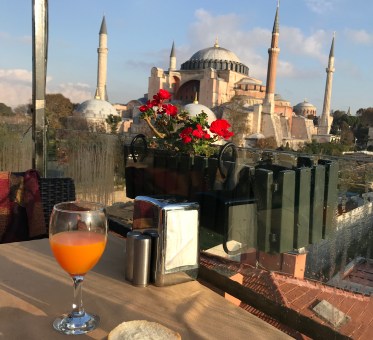
Arriving in November the weather was a bit hit and miss; sunny the first day, colder the next and rainy the day after that. We made the most of the sun with breakfast at Seven Hills Hotel Cafe which overlooks the Hagia Sophia on one side and the Blue Mosque on the other. We had booked the hotel online then were pleased to be upgraded when we arrived to a balcony room; but even if you aren’t staying there it is worth going up to the Cafe. It might have been due to us having a surname that is well known in Turkey (we got asked a lot if we were Turkish) – whatever the reason, we were grateful for the fancy upgrade.
Once full up of Turkish Coffee and pastries we made the short walk to the Topkapi Palace. Ever present in Istanbul are the x-ray machines, once through, we came out into a large garden area which was was once the heart of the Ottoman Empire. We got one audio guide between us and headed off to explore (in hindsight we would have been better off getting one each, there are some signs explaining what things are, but not many).


The architecture and decoration is amazing, vibrant colours remain from the palaces construction in the 1460’s. The site also houses a museum, with artwork, weapons, textiles and manuscripts. One area is dedicated to religious relics and includes a staff that supposedly belonged to Moses and a cooking pot of Abraham. I think it is probably unwise to comment too much on their authenticity, other than to say that there was no detail given as to how they knew who owned what.
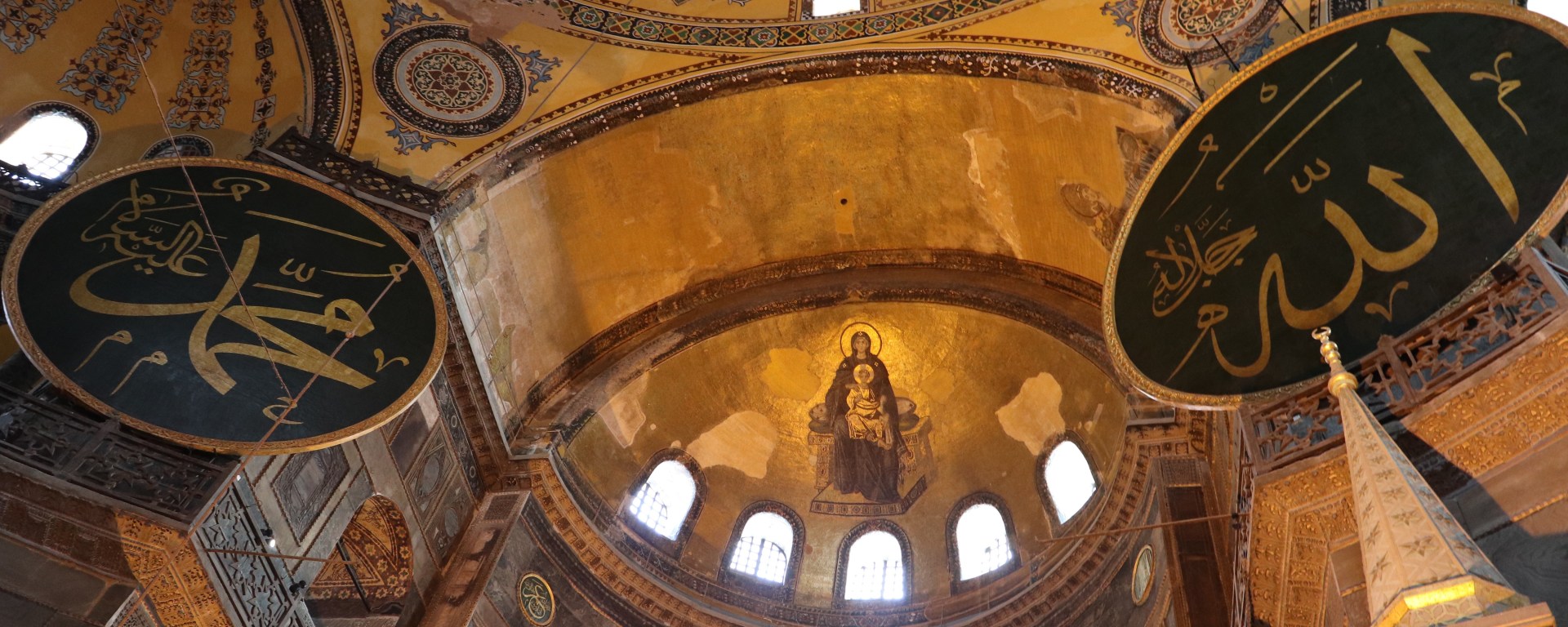
Once our brains were full of Ottoman facts (the empire lasted for 600 years and there is a lot known about it) we headed out to the Hagia Sophia, probably the most famous building in Turkey. Originally built as a Church in 537, it was converted to a mosque in 1453 and remained so until it became a museum in 1935. This mix of religious styles has resulted in an extraordinary interior that has to be seen to be believed. The site itself had been in use as a Church since the 15th February 360, although the nearby Hagia Eirene is known to be even older.


Despite it no longer being used for religious purposes, there is still a hushed awe that falls on people when they walk in. There are no chairs, just a vast space, filled with people looking upwards. It is amazing to think how many people have worshipped in this space, even just how many people have been through the doors over the years.
There are various murals and mosaics in evidence from the days it was a Church, as well as huge calligraphy banners with the names of the Prophet and Caliphate. We wandered around, soaking in the atmosphere before heading outside to the Tombs of the Sultans. The tombs show the reverence that the Sultans were held in, with each tomb highly tiled and beautifully intricate. Each Sultan was buried with members of their family, which provides a moving display, particularly with child sized sarcophagi alongside those of the adults. There were quite a few people taking photos, I didn’t, it felt a bit odd and disrespectful somehow.


There were many Sultans of the Empire, with the Selim Sultans of course being our favourite – not sure if you can see any family resemblance!

 Luxury Explorers